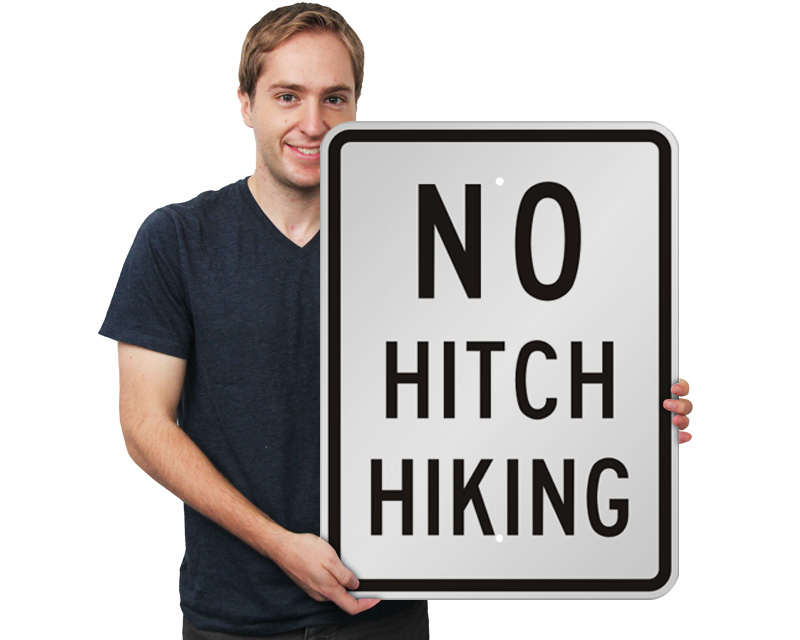
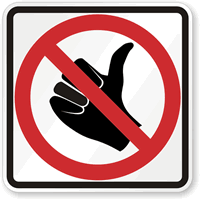
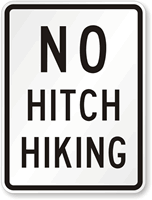
Yes, hitchhiking is illegal in areas where no hitchhiking signs are installed, as these signs indicate local ordinances or state laws prohibiting the practice. Violators can face fines ranging from $50–$200 depending on jurisdiction. These restrictions typically apply on highways and interstate ramps. Drivers can refer to the no hitchhiking sign for a standard regulatory example.
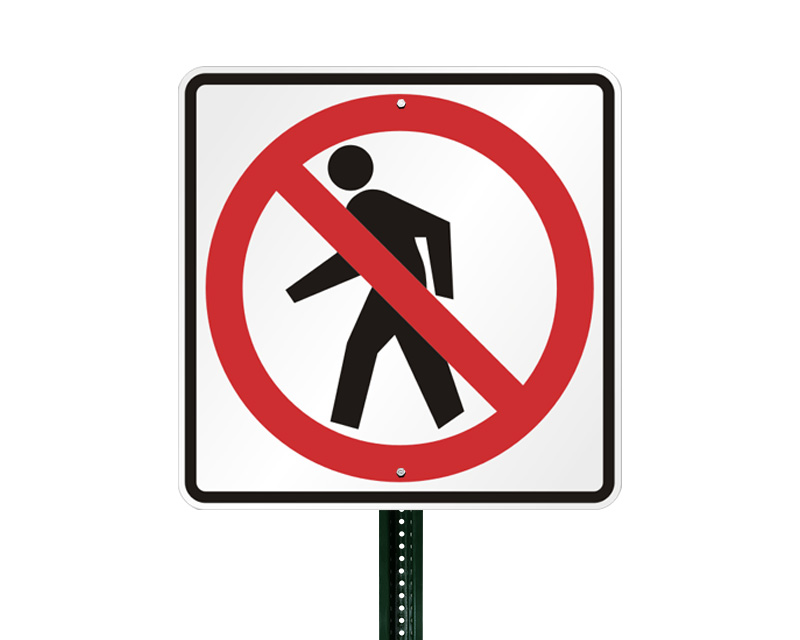
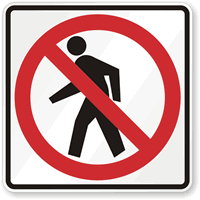
Hitchhiking is prohibited in certain areas to reduce roadway hazards, prevent sudden traffic stops, and enhance pedestrian safety. The hitchhiking prohibition sign helps communicate restrictions clearly. These signs are often installed near busy highways or interchanges, alongside pedestrian crossing signs to guide safe walking behavior.
No hitchhiking signs are generally placed at highway entrances, interchanges, rest areas, and city boundaries where standing pedestrians could create traffic hazards. Common examples include the no hitchhiking road sign and hitchhiking prohibition sign, which are used to improve road safety.
Drivers who stop to pick up hitchhikers in restricted areas typically face no penalties unless they create unsafe conditions or block traffic. The hitchhiker, however, may receive a citation for violating posted ordinances. Properly placed no hitchhiking signs help prevent such violations and protect both pedestrians and drivers.
No hitchhiking signs are enforceable mainly on public highways and interstates governed by state and local regulations. Enforcement is strongest along controlled-access roads under state jurisdiction. Local roads may vary depending on municipal codes. For federal compliance standards, see MUTCD Section 2B.
Deter hitchhikers with these bold graphic signs.
Call our sales team at 888-343-3771 and get your quote in minutes!
Mon - Fri 8:00am to 7:00pm EST
Best price guarantee. Fast, free shipping.