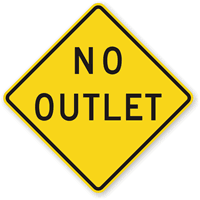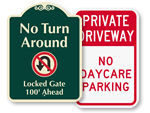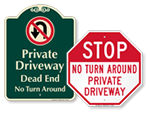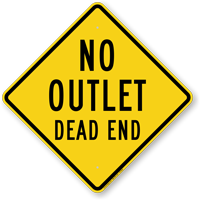
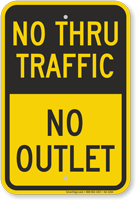
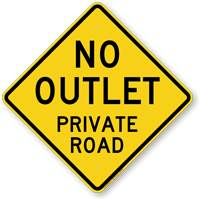
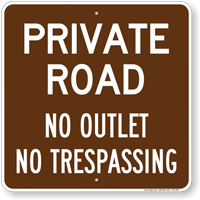
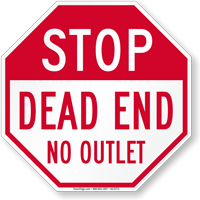

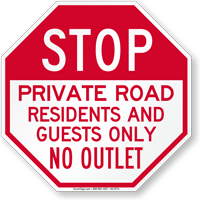
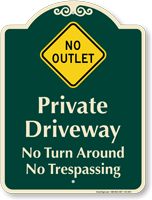
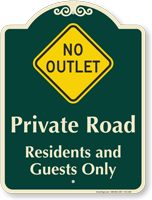
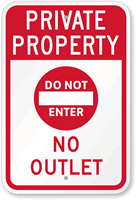

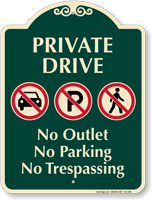
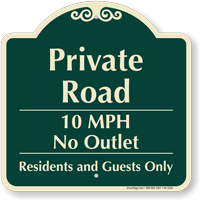

A no outlet sign warns drivers that the street ahead does not connect to another road and ends in a cul-de-sac or dead end. These white rectangular signs help reduce unwanted traffic in residential areas. Examples include the standard no outlet sign and no outlet right arrow sign for directional indication.
No outlet signs indicate streets with limited access where no through connections exist, while dead end signs show roads that terminate completely. No outlet applies to multiple-branch neighborhoods; dead end applies to a single roadway termination. Both reduce traffic confusion and unnecessary turns.
No outlet signs should be placed at the entrance of non-through street systems, generally 50–200 feet before commitment points. They’re positioned at driver eye level on the right-hand side. The no outlet right arrow sign helps guide motorists entering limited-access zones. Refer to MUTCD Section 2C – Warning Signs for placement guidance.
Yes, no outlet streets can be freely used by residents, guests, delivery, and emergency vehicles. These signs primarily warn through-traffic drivers that the street doesn’t connect elsewhere, preventing unnecessary detours and congestion in neighborhoods.
No outlet signs are not universally required but are recommended in residential developments with complex layouts. They prevent confusion for drivers expecting through access. Many municipalities also use dead end ahead signs to enhance safety and reduce navigation errors.
Having issues with motorists taking unnecessary detours in your neighborhood? Post No Outlet Signs letting drivers know that there is not another exit on the road.
Call our sales team at 888-343-3771 and get your quote in minutes!
Mon - Fri 8:00am to 7:00pm EST
Best price guarantee. Fast, free shipping.