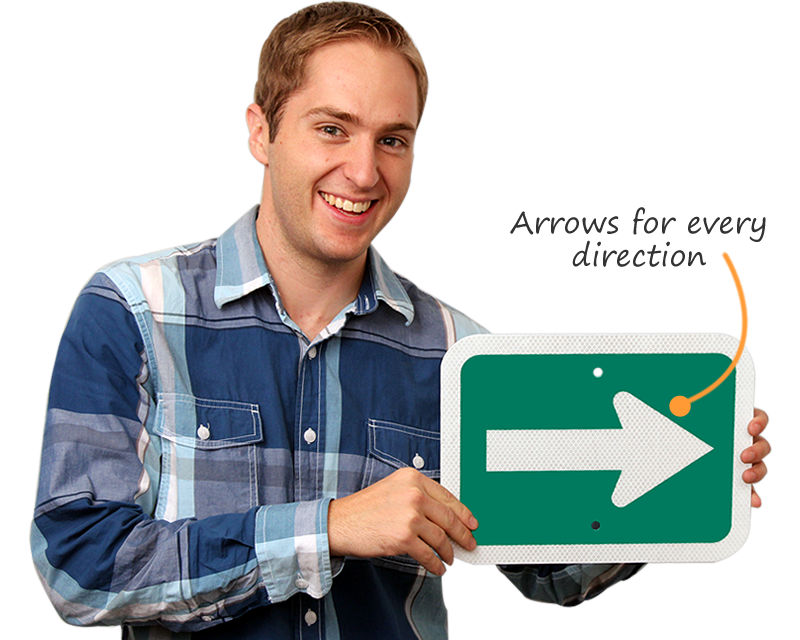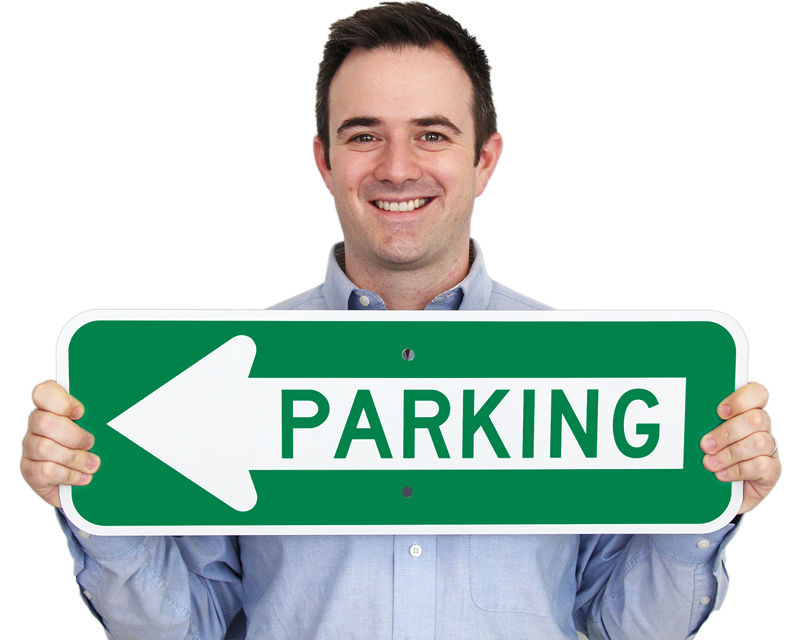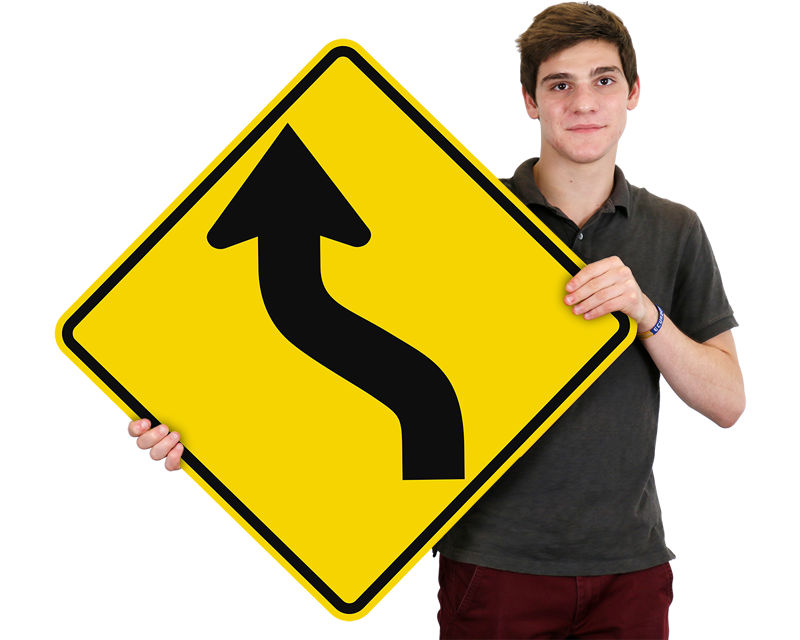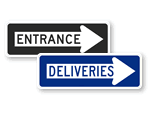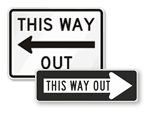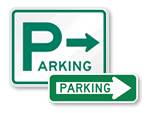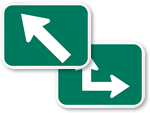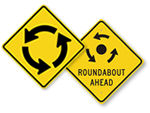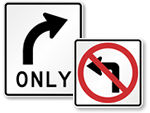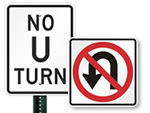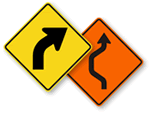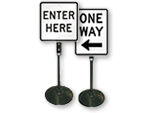
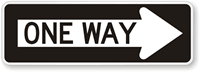
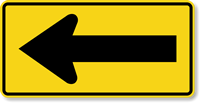
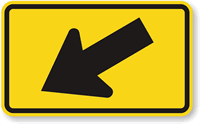
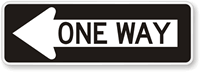
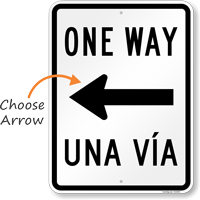
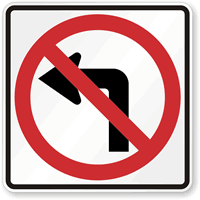
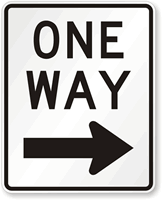
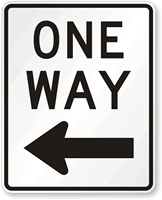
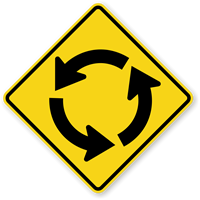
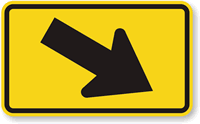

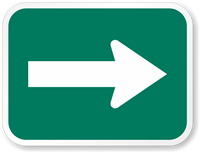
Arrow directional signs are used for navigation, information and identification, warning drivers of upcoming changes, and reinforcing other signs as supplemental plaques. Arrow directional signs help everyone navigate effortlessly to reach a particular destination, and wayfinding arrow signs provide guidance to vehicle users and pedestrians alike in large warehouses, hotels, university campuses, offices, event grounds, or hospitals without leaving room for confusion. When used outdoors, arrow directional signs can direct traffic to the nearest parking, entrance, upcoming one-way, curve, turn, U-turn, roundabout, or other changing road condition ahead, and directional signs are often placed underneath another sign to reinforce instructions or directions.
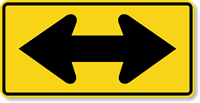
Arrow directional signs should be mounted at decision points within a parking structure that direct people to their destination, such as the parking entrance, exit, additional parking areas, elevators, and stairs. Under MUTCD Section 2B.40, a parking restriction in an area or zone should be shown by arrows or supplemental plaques, with arrow signs mounted at the end of a parking zone using a single-headed arrow, at an intermediate point in the zone using a double-headed arrow, or at the transition point between two parking zones using a right and left arrow.
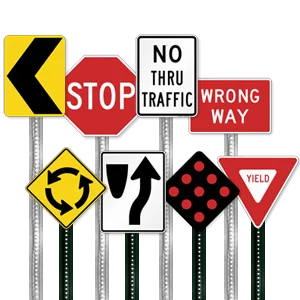
Chevron alignment signs are signs with a black arrowhead on a yellow background that provide additional emphasis and guidance for a change in horizontal alignment on the road. Chevron alignment signs can be used as a replacement for standard delineators, are installed on the outside of a turn or curve in line with and at approximately a right angle to approaching traffic, and must be installed at a minimum height of 4 feet, measured vertically from the bottom of the sign to the elevation of the near edge of the road, under MUTCD requirements.
Directional arrows prevent wasted time because they're almost universally recognizable, letting people understand which way to head just by looking at the arrow. Simple and clear directional signage greatly reduces the time people would otherwise spend asking others or a traffic control officer for directions, freeing them to focus on other tasks instead of repeatedly asking for directions.
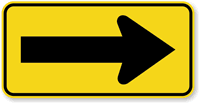
Yes, MUTCD provides specific design specifications for several types of arrow traffic signs. MUTCD Section 2C.12 requires One-Direction Large Arrow Signs to be a horizontal rectangle with an arrow pointing left or right, while Section 2C.47 requires the Two-Direction (Double) Arrow Sign to be black on yellow, a horizontal rectangular sign with a large horizontal double-headed arrow. Supplemental arrow plaques, referred to as such in the MUTCD, have a minimum size that varies by the warning sign they're paired with under MUTCD Table 2C-3, with 24 inches wide by 18 inches high being a common size, and must be black on yellow or fluorescent yellow-green where applicable. MUTCD Section 2D.26 requires Advance Turn Arrow auxiliary plaques to display a right or left arrow with a shaft bent at a 90-degree or oblique angle, measuring a minimum of 21 inches wide by 15 inches high, with the color matching the route sign the plaque supplements rather than a fixed black-on-white. Detailed specifications for each arrow sign type are available in MUTCD Chapter 2C.
We are the industry leader in arrow traffic signs, offering plain and simple directional signs that direct vehicles and help prevent accidents by pointing drivers in the right, left, or merging direction they need to go.
Call our sales team at 888-343-3771 and get your quote in minutes!
Mon - Fri 8:00am to 7:00pm EST