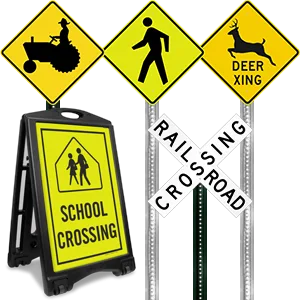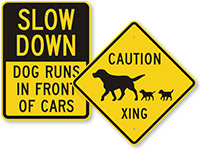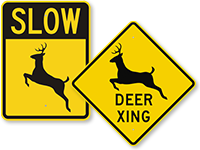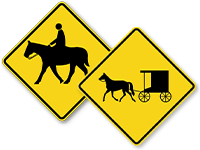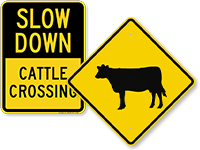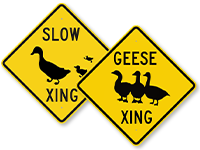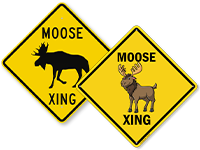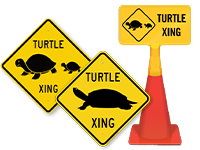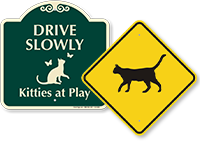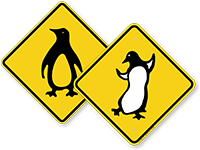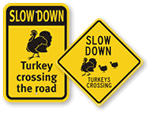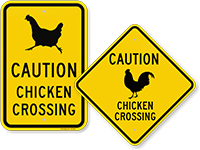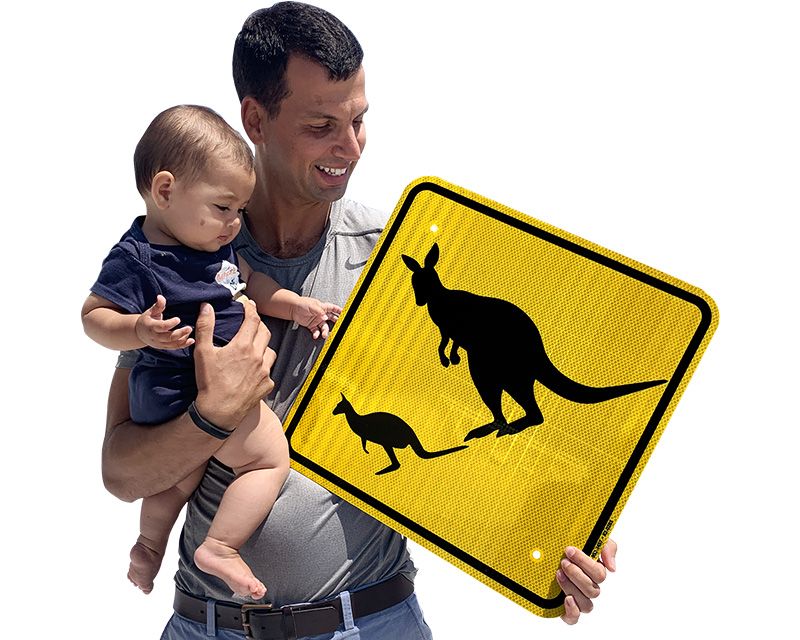
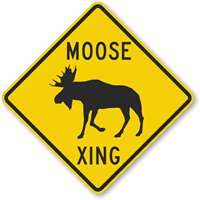
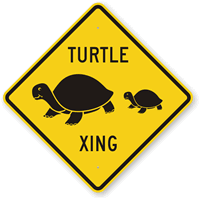
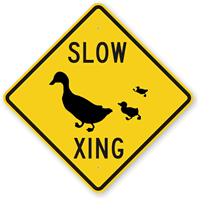
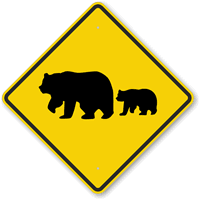
Animal crossing signs range from smaller sizes like 12"x12" up to larger sizes such as 36"x36" or 36"x48", depending on the specific sign style. Larger animal crossing signs work well on higher-speed highways where drivers need more distance to read and react, while smaller sizes suit driveways, rural roads, and low-speed areas.
Animal crossing signs are made from heavy-duty, rustproof aluminum with 3M reflective materials, giving them the durability to withstand years of outdoor exposure. Reflective animal crossing signs are especially important at night, since many animals are most active and most likely to enter the road after dark.
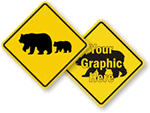
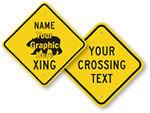
Yes, a custom crossing sign template is available for animals or messages not covered by the standard catalog, letting you add your own text or graphic. Custom animal crossing signs are made from the same durable materials as standard stock signs, so a unique design doesn't come at the cost of outdoor performance.
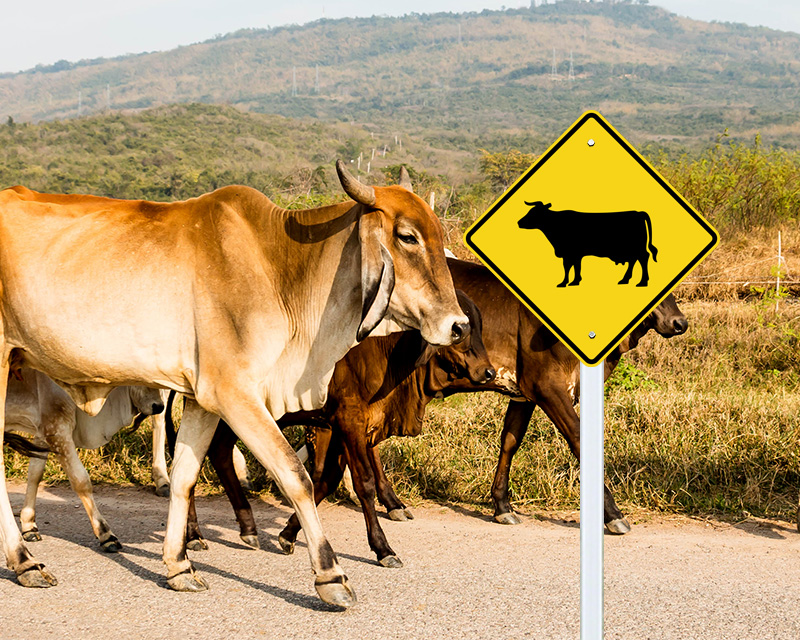
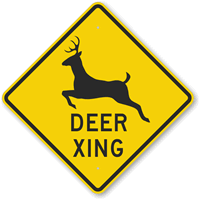
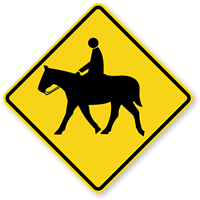
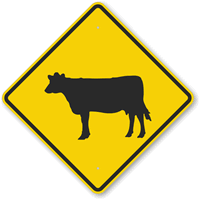
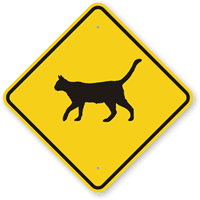
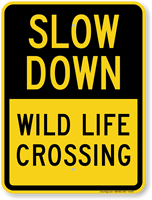
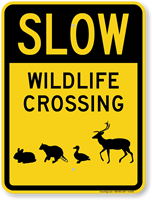
An animal crossing sign is the broader category, covering everything from farm animals like cattle and horses to wildlife like deer and moose. A wildlife crossing sign specifically refers to signs warning drivers about wild animals crossing a road, which is why deer, bear, and moose signs fall under both categories while a cattle or horse crossing sign is considered a farm animal sign rather than a wildlife sign.
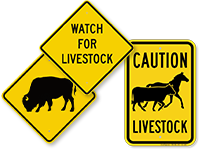
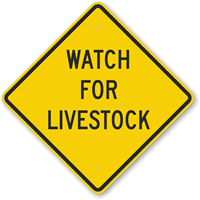
A "Watch for Livestock" sign warns drivers that farm animals, such as cattle or sheep, may be present on or near the roadway, often near ranches, pastures, or rural properties without fencing directly along the road. This type of animal crossing sign is especially useful on rural roads where livestock can wander from an adjacent field onto the pavement.
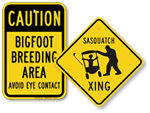
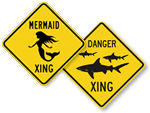
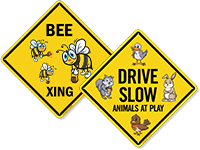
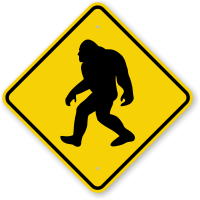
Novelty animal crossing signs, such as Sasquatch, shark, whale, or mermaid designs, are intended as fun, decorative signage rather than official traffic warnings. These animal crossing signs are popular for cabins, lake houses, and novelty gifts, and they're made from the same durable aluminum as standard signs, even though they aren't meant to meet MUTCD requirements for public roads.
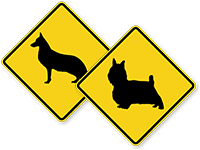
Yes, animal crossing signs are available by dog breed in addition to the general dog crossing design, letting pet owners post a sign that matches the specific breed living on their property. Breed-specific animal crossing signs are especially popular for driveways, farms, and rural homes where a particular dog is known to roam near the road.
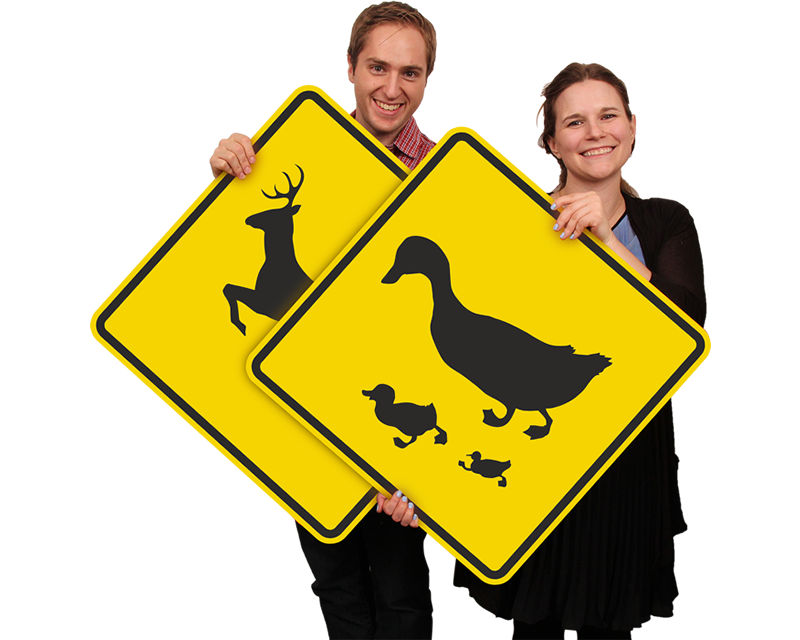
We are the industry leader in animal crossing signs, helping warn motorists to slow down in areas where wildlife, farm animals, or horseback riders may be present. Drivers can't avoid what they don't see, and this bold, highly visible collection covers everything from deer and ducks to cows, horses, bears, and moose.
Call our sales team at 888-343-3771 and get your quote in minutes!
Mon - Fri 8:00am to 7:00pm EST
Best price guarantee. Fast, free shipping.