
Pedestrian Crossing Signs: Types, Regulations & Where to Install Them
Every day, thousands of pedestrians’ cross streets in our communities school children heading to class, families walking to the park, and commuters navigating busy intersections. The simple yellow signs marking these crossings play a crucial role in keeping everyone safe.
According to the National Highway Traffic Safety Administration, a pedestrian is killed every 85 minutes in traffic crashes in the United States. While these statistics are sobering, proper signage can dramatically reduce these incidents by alerting drivers to expect pedestrian activity and slow down accordingly.
Whether you’re a traffic engineer for a municipality, a school administrator looking to improve campus safety, or a concerned homeowner in a residential neighborhood, understanding pedestrian crossing signs is essential. This comprehensive guide will walk you through the different types of crossing signs, federal and local regulations you need to follow, and exactly where to install them for maximum effectiveness.
Understanding Pedestrian Crossing Signs
Pedestrian crossing signs are traffic control devices designed to warn drivers that they are approaching an area where people frequently cross the street. These signs serve as a visual alert system, giving drivers time to reduce speed and watch for pedestrians entering the roadway.
Most pedestrian signs follow a standard design you have probably seen countless times: a bright yellow or fluorescent yellow-green background with black symbols showing people crossing. This color combination isn’t random—yellow is universally recognized as a warning color that catches the eye even in peripheral vision.
MUTCD: The Rulebook for Road Signs
In the United States, pedestrian crossing signs must comply with the Manual on Uniform Traffic Control Devices (MUTCD), published by the Federal Highway Administration. The MUTCD sets national standards for sign design, color, size, and placement to ensure consistency—so a yellow pentagon always means “school crossing,” whether in California or Connecticut.
States and local agencies may adopt their own versions as long as they meet or exceed federal standards—some require larger signs or flashing beacons in school zones. Always check with your state or local DOT before installing signs on public roads. For private roads, rules are more flexible, but following MUTCD guidelines helps maintain consistency and legal protection.
Materials Matter: Building Signs That Last
Quality pedestrian crossing signs are built to withstand years of exposure to sun, rain, snow, and wind. Most professional-grade signs use aluminium as the base material. Unlike steel, aluminium won’t rust, and it’s lightweight enough for easy installation while being sturdy enough to resist bending.
The reflective sheeting bonded to the aluminium face is where the real magic happens. There are three main reflective grades:
– Engineer Grade – Most economical, lasts about 7 years; best for well-lit, low-speed areas.
– High-Intensity Grade – Brighter and longer-lasting (10+ years); ideal for busier or darker roads.
– Diamond Grade – Top visibility for high-risk areas like school zones; highest cost but best performance.
Types of Pedestrian Crossing Signs
Now let’s dive into the specific types of pedestrian crossing signs and when to use each one.
Standard Pedestrian Crossing Signs
 Traditional Crosswalk Warning Signs (W11-2)
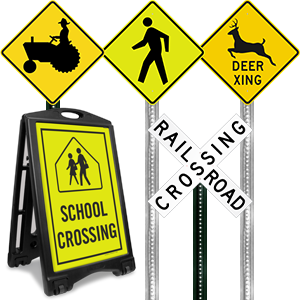
The classic pedestrian crossing sign features a simple, powerful image: a person walking inside a crosswalk. This is officially designated as sign W11-2 in the MUTCD, and it’s the most common pedestrian warning sign you’ll encounter.
Standard sizes range from 18″ x 18″ to 36″ x 36″, with the larger size recommended for roads with speed limits above 35 mph or in areas with heavy pedestrian traffic. The diamond shape is instantly recognizable as a warning sign, and the yellow background with black symbol provides excellent contrast in all lighting conditions.
These signs work best in urban and suburban settings where marked crosswalks exist but there’s no traffic signal. Think downtown shopping districts, main street commercial areas, or busy intersections near transit stops where pedestrians regularly cross.
 Pedestrian Crossing Ahead Signs
Pedestrian Crossing Ahead signs warn drivers 200–500 feet before a crosswalk, giving extra time to slow down and watch for pedestrians—especially on higher-speed roads or where visibility is limited. They’re often paired with distance plaques like “500 FT” or “AHEAD.”
In-Street Pedestrian Crossing Signs
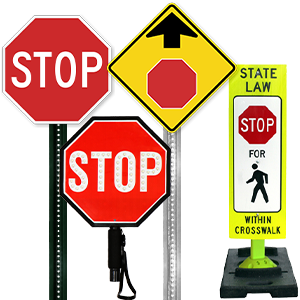
You’ve probably seen these: vertical signs on flexible posts positioned right in the middle of the roadway at crosswalk locations. These in-street signs literally put the warning message directly in the driver’s line of sight.
The flexible posts are designed to bend when struck by vehicles rather than causing damage, then spring back into position. This makes them surprisingly durable despite their exposed location.
However, be aware that not all states allow in-street pedestrian signs. Some jurisdictions consider them potential hazards or obstruction to snow removal. Check your local regulations before installing these. In areas where they’re permitted, they’ve proven highly effective at reducing pedestrian crashes at mid-block crossings.
Where to Install Standard Pedestrian Crossing Signs
Standard pedestrian crossing signs belong at:
- Mid-block crosswalks without traffic signals, especially in downtown or commercial areas
- High-traffic pedestrian zones near shopping centres, restaurants, or entertainment venues
- Public transportation stops where passengers regularly cross to reach bus stops or train stations
- Hospital and medical facility zones where patients and visitors cross frequently
- Parks and recreational areas where families access playgrounds, sports fields, or trails
- Senior living facilities where elderly residents may cross more slowly
The key is identifying locations where pedestrian traffic is predictable and frequent, but where there’s no traffic signal to control the crossing.
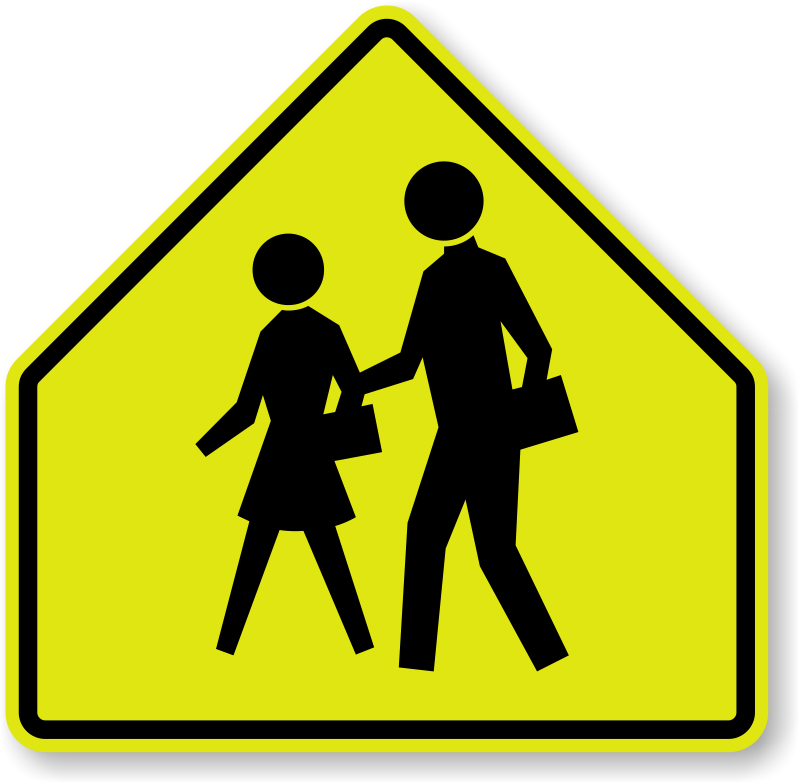
School crossing signs occupy a special category in traffic safety. These signs protect our most vulnerable road users—children—who may be less aware of traffic dangers and harder for drivers to see.
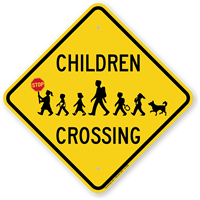
Children crossing signs are similar to school crossing signs but serve different locations and purposes. While school signs mark official school crossings near educational facilities, children crossing signs warn of areas where kids may be present in other contexts.
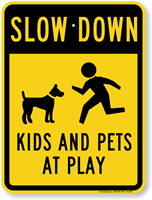
Kids and pets at play signs blend safety awareness with a more casual, neighborhood-friendly approach. These signs acknowledge the reality of suburban and residential life: children and family pets often share the same play spaces.
Installation Guidelines & Best Practices
Having the right sign is only half the equation—proper installation is equally important for effectiveness and compliance. Here’s what you need to know about installing pedestrian crossing signs correctly.
Height and Placement Standards
The MUTCD specifies that the bottom of pedestrian crossing signs should be mounted 7 feet above the ground in urban areas. This height ensures the signs are visible over parked cars while being high enough to discourage vandalism.
In rural areas or locations without parking, signs can be mounted as low as 5 feet, but 7 feet is the standard recommendation for consistency.
Lateral placement is also important. Signs should be positioned 6 to 12 feet from the edge of the roadway. This offset keeps them out of the clear zone (the area where an errant vehicle might strike the sign) while maintaining visibility. On sidewalk installations, the signs should not obstruct the pedestrian pathway—maintain at least 4 feet of clear sidewalk width.
Visibility Requirements
Ensure drivers can see signs from at least 200 feet away (500 feet on roads 45+ mph). Check for obstructions like tree branches, utility poles, and seasonal foliage. Test nighttime visibility with headlights and verify the sign reflects properly from the required distance. In poorly lit areas, upgrade to high-intensity reflective sheeting.
Post and Mounting Options
U-channel posts are most common—10-foot steel posts with 3 feet set in ground. Breakaway posts are required near high-speed roads (45+ mph) and collapse on impact for safety. Wall or fence mounting works when signs need placement on buildings. In-street signs use flexible posts that bend and return upright after vehicle contact.
Choosing the Right Sign for Your Needs
With so many options available, how do you decide which pedestrian crossing sign is right for your situation? Here’s a practical framework for making the decision.
Start with Key Questions
Is this a public road or private property?
This is the most important distinction. Public roads require MUTCD-compliant signs and often need approval from local traffic engineering departments. Private roads and community streets offer more flexibility.
What’s the speed limit?
Higher-speed locations require larger signs with higher-grade reflective sheeting for adequate visibility. Roads with speed limits above 35 mph should use 36″ or larger signs rather than the 30″ minimum.
How much pedestrian traffic?
Heavily used crossings justify investment in larger signs, advance warning signs, and supplemental features like flashing beacons. For locations with occasional pedestrian crossing, standard signs may be sufficient.
Who are the pedestrians?
Schoolchildren require pentagon-shaped school crossing signs. General pedestrian areas use diamond-shaped crossing signs. Residential areas with families might benefit from children and pets signs on private streets.
What’s your budget?
While safety shouldn’t be compromised, understanding your budget helps prioritize. A school district might install premium signs with flashing beacons at the main entrance while using standard signs at less critical locations. Focus resources where pedestrian risk is highest.
Compliance Checklist
Before purchasing or installing signs, verify:
- MUTCD compliance for all signs going on public roadways (check the sign code like W11-2 or S1-1)
- Local municipality requirements which may exceed federal standards for size, reflectivity, or features
- State-specific regulations as some states have additional requirements beyond MUTCD
- HOA rules for private community installations which may have restrictions on sign types or placement
- Permit requirements as many jurisdictions require permits before installing signs on or near public roads
Taking time to confirm compliance upfront prevents expensive mistakes and potential legal issues down the road.
Where to Buy Pedestrian Crossing Signs
When you’re ready to purchase pedestrian crossing signs, choosing a reputable supplier makes all the difference in getting quality products that meet regulations and last for years.
What to Look for in a Sign Vendor
MUTCD compliance guarantee: The supplier should explicitly state that their signs meet current MUTCD standards. This protects you legally and ensures the signs will be accepted by local authorities.
Material quality certifications: Look for certifications from testing organizations that verify reflectivity ratings, material durability, and weather resistance. Quality vendors are transparent about the materials and manufacturing processes they use.
Customization options: Whether you need custom sizes, specific color combinations, or personalized text, a good vendor should accommodate special requests while maintaining safety standards.
Expert customer support: Traffic sign regulations can be confusing. The best vendors employ knowledgeable staff who can answer technical questions about sign selection, placement requirements, and local regulations.
Fast, reliable shipping: When you need signs for a safety project, waiting weeks for delivery isn’t acceptable. Look for vendors who stock common signs and can ship quickly.
Installation support: Some vendors provide installation guides, recommended hardware, or even referrals to professional installers in your area.
At RoadTrafficSigns.com, we specialize in MUTCD-compliant traffic signs including the full range of pedestrian crossing signs discussed in this guide. Our signs are manufactured with heavy-gauge aluminum and premium reflective sheeting designed to last a decade or more. We offer both standard sizes and custom options to meet your specific needs, whether you’re outfitting an entire school district or installing a single sign for your neighborhood.
Frequently Asked Questions
Q. Can I install pedestrian crossing signs on my own street?
A.: It depends on whether your street is a public roadway or private road. For public roads maintained by your city or county, you generally cannot install signs without permission from the local traffic engineering or public works department. Unauthorized sign installation can result in removal and potential fines.
For private roads within your community or HOA, you may have more flexibility, but should still check with your HOA board or property management. Even on private roads, it’s wise to follow MUTCD standards to ensure the signs are effective and don’t create liability issues.
Q. Do I need permission to install crossing signs?
A.: Yes, in most cases. Public roadways require permits and approval from local authorities before any signage installation. This ensures signs are placed appropriately and don’t create conflicts with other traffic control devices.
For private property, you can typically install signs on your own land without permission, though HOA rules may apply. Before installing signs that face or affect public streets, contact your local traffic or public works department to understand the permit process.
Q. What’s the difference between school crossing signs and children crossing signs?
A.: School crossing signs are pentagon-shaped, fluorescent yellow-green, and specifically mark official school crossing locations designated by school districts and municipalities. They’re regulated under MUTCD section S1-1 and require specific placement and maintenance standards.
Children crossing signs are diamond-shaped, standard yellow, and mark areas where children may be present but not necessarily official school crossings. These are sometimes used in residential areas or near daycare facilities.
The key difference is that school crossing signs are official traffic control devices for public roadways, while children crossing signs are often used on private community roads and carry less regulatory weight.
Q. How long do pedestrian crossing signs last?
A.: Quality pedestrian signs typically last 7-12 years depending on the reflective sheeting grade and environmental conditions. Engineer-grade reflective sheeting usually maintains effectiveness for 7-10 years, while high-intensity and diamond-grade sheeting can last 10-12 years or longer.
Factors that affect lifespan include:
- UV exposure (signs in sunny climates fade faster)
- Weather extremes (harsh winters or coastal salt air accelerate wear)
- Air pollution and industrial environments
- Vandalism or accidental damage
- Quality of materials and manufacturing
Regular inspection and maintenance can help you identify when signs need replacement before they become ineffective.
Q. Are custom pedestrian signs legal?
A.: Custom pedestrian signs can be legal for use on private property or private roads, but customization options are limited for signs on public roadways. Any sign on a public street must comply with MUTCD standards, which specify exact colors, sizes, symbols, and text.
Customization typically allowed even on public roads includes:
- Choosing between approved size options
- Selecting appropriate reflective sheeting grade
- Adding approved supplemental plaques like “AHEAD” or distance markers
For private property and community roads, you have much more freedom to customize signs with family names, personalized messages, or unique graphics, as long as they don’t create confusion with official traffic signs.
Category: Uncategorized
