
Decoding Traffic Signs: Understanding Colors, Shapes and Symbols
Every time you get behind the wheel, you are participating in a complex communication system. Traffic signs are the language of the road, designed to convey critical information in the blink of an eye. Whether you are driving through a construction zone or navigating a new city, instant recognition of these markers is essential for safety.
According to the Federal Highway Administration (FHWA), the Manual on Uniform Traffic Control Devices (MUTCD) standardizes every sign in the United States. This consistency ensures that a red octagon means “Stop” in Maine just as it does in California.
However, relying solely on reading the text is dangerous. At 65 MPH, you may not have time to read “Right Lane Ends.” You must recognize the orange diamond and react immediately. Learn more about the specific color codes and shapes that define roadway safety and how to interpret them instantly.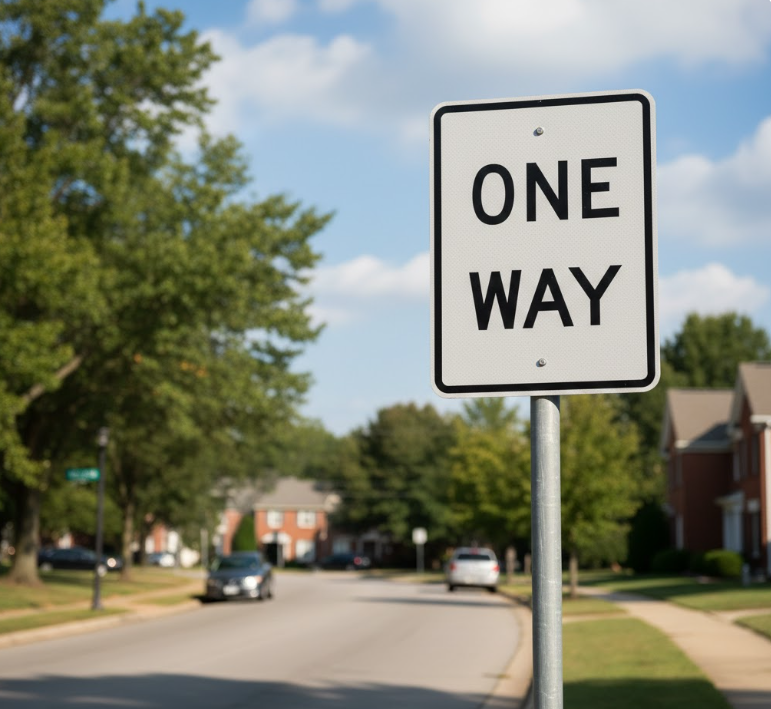
Why Design Matters: The Psychology of Signs
Traffic engineers do not choose colors and shapes at random. They are selected based on human psychology and visibility. The Logic: Traffic sign colors trigger specific emotional responses. Red signals danger and inhibition. Yellow triggers caution. Shapes also play a role; the more sides a sign has, the more critical the message typically is. An octagon (8 sides) commands more attention than a rectangle (4 sides).
Decoding Traffic Sign Colors
The background color of a sign is your first clue to its category.
1. Red: Prohibition and Stop
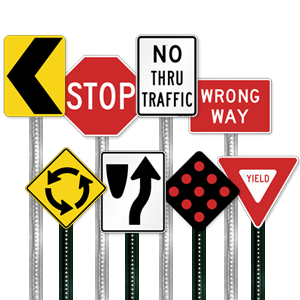
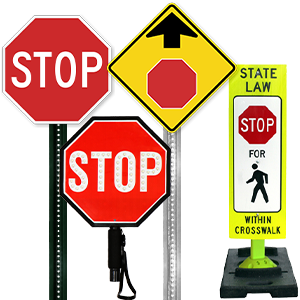
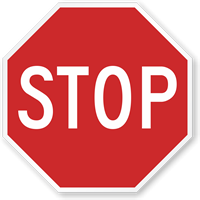
Red traffic signs indicate immediate danger or a mandatory action. The Meaning: You must stop, yield, or do not enter. Examples: Stop signs, Yield signs, “Do Not Enter,” and “Wrong Way.”
2. Yellow and Fluorescent Yellow-Green: Warning
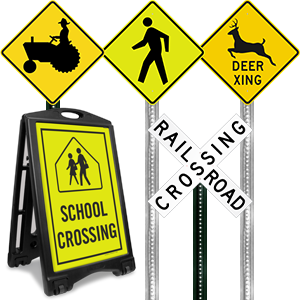
These are the most common signs on the road. The Meaning: Yellow road signs warn of permanent hazards like curves or deer crossings. Fluorescent yellow-green signs are reserved specifically for school zones and pedestrian crossings because this color is highly visible in low light. Examples: “Merge Ahead,” “Slippery When Wet,” and “School Crossing.”

3. Orange: Temporary Traffic Control
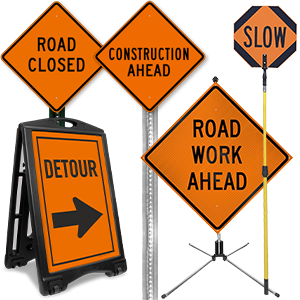
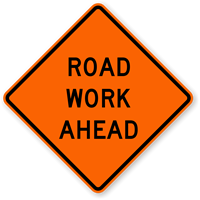
If you see orange, the road conditions have changed. The Meaning: Orange construction signs indicate a work zone. Drivers should expect lane shifts, uneven pavement, and workers on the road. Fines are often doubled in these zones. Examples: “Road Work Ahead,” “Flagger Ahead,” and “End Road Work.”
4. White and Black: Regulation
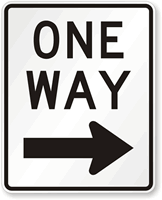
These signs are the rulebook of the road. The Meaning: Regulatory traffic signs tell you what you can and cannot do legally. They are enforceable by police. Examples: Speed limit signs, “One Way,” and “No Turn on Red.”
5. Green, Blue, and Brown: Guides
These signs are for navigation rather than safety regulation. The Meaning:
-
Green: Directional guidance (Exit signs, Mile markers).
-
Blue: Motorist services (Gas, Food, Lodging, Hospitals).
-
Brown: Recreational and cultural interest points (State Parks, Historic Sites).
Decoding Traffic Sign Shapes
Even if a sign is covered in snow or faded by the sun, its shape tells you what to do.
-
Octagon (8 Sides): Exclusively used for Stop signs. No other sign uses this shape.
-
Inverted Triangle: Exclusively used for Yield signs.
-
Diamond: The universal shape for warning signs. If it is a diamond, there is a hazard ahead.
-
Pennant (Sideways Triangle): This shape is placed on the left side of the road to indicate a “No Passing Zone.”
-
Pentagon (House Shape): This signifies a school zone or school crossing. Slow down and watch for children.
-
Circle: This warns of a railroad crossing ahead.
-
Vertical Rectangle: Used for regulatory signs like speed limits.
-
Horizontal Rectangle: Used for guide signs and information.
Incorporate Sign Knowledge Into Your Driving
Understanding the “code” of the road reduces reaction time. When you instinctively know that a yellow diamond means “caution” and an orange sign means “slow down,” you become a safer, more defensive driver.
Read through some of the other articles published on our blog to get more expert advice on driver safety tips and roadway regulations.
Frequently Asked Questions (FAQ)
1. What do the different shapes of traffic signs mean?
A. Shapes indicate the level of danger and the type of message. An octagon always means Stop. An inverted triangle means Yield. A diamond indicates a warning or hazard. A vertical rectangle indicates a regulatory rule (like a speed limit), while a pentagon marks a school zone.
2. What are the 3 classifications of traffic signs?
A. Regulatory, Warning, and Guide signs.
Regulatory signs (White/Red) enforce laws (e.g., Speed Limit).
Warning signs (Yellow/Orange) alert drivers to hazards (e.g., Sharp Curve).
Guide signs (Green/Blue/Brown) provide directions and service information (e.g., Exit 5).
3. What does an orange traffic sign indicate?
A. It indicates temporary construction or maintenance. Orange road signs are used exclusively for work zones. They warn drivers of temporary conditions such as lane closures, flaggers, or uneven pavement. Drivers should reduce speed and stay alert when entering these zones.
4. What is the difference between yellow and fluorescent yellow-green signs?
A. Fluorescent yellow-green is for pedestrian safety. While standard yellow signs warn of general road hazards (curves, merging traffic), fluorescent yellow-green signs are reserved for school zones, pedestrian crossings, and bicycle crossings. This color is brighter and easier to see during dawn and dusk.
Category: Uncategorized
